Planet Clicker 2 turns the clicker formula into a space program. Instead of one cookie or one coin, you get an entire solar system: tap Earth to harvest energy, spend that energy on upgrades and automated structures, and eventually buy your way to Mars and Venus, each with its own resources and bigger production multipliers. The sequel’s hook is that you are never done with one planet before the next one starts calling. There is always a new structure to afford, a new world to unlock, and the constant question of whether to upgrade what you have or save for the next big jump.
What Is Planet Clicker 2?
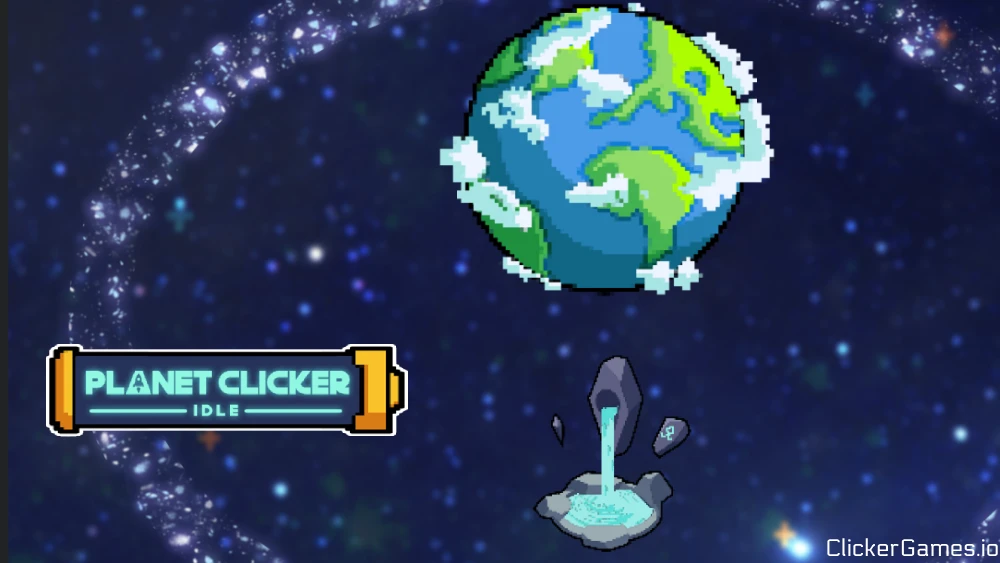
Planet Clicker 2 is the sequel in the Planet Clicker series, and it keeps the idea that made the original stand out from the wall of cookie-and-coin tappers: your clicking powers planets, not pastries. Energy is the universal currency. You harvest it by tapping the active planet, you spend it on structures that harvest more of it automatically, and you bank it toward the purchase that changes everything — the next planet.
Three worlds are on the menu: Earth, Mars, and Venus. Each planet you unlock brings unique resources and higher production multipliers, so a new world is never a lateral move. It is always a step change, the moment your whole economy shifts up a gear. That planetary ladder gives the game a shape most clicker games lack — instead of one endless number, you get distinct chapters with a clear finish line in each.
Two extra systems round out the sequel. Crisis events can pop up unexpectedly and shake your production, rewarding players who pay attention rather than pure AFK farming. And there are social features — you can chat and trade with other players, which is genuinely rare in the genre and gives stuck players a way to move past plateaus. It all runs free in your browser in Chrome, Safari, or Edge, with no download and no sign-up.
How to Play Planet Clicker 2
Click or tap the active planet to gather energy units. That is the seed of everything. The side menu holds your upgrades, which come in two flavors: some raise your energy per click, others build automated structures — power plants, nuclear reactors, and futuristic farms — that generate energy on their own, even while you are away from the game.
Start on Earth and pour your early energy into click upgrades and your first buildings. Early on, every purchase noticeably moves your numbers, so buy often rather than saving. Once production is rolling, the goal flips: start saving for Mars. Unlocking it opens a second economy with better multipliers, and the planet switcher lets you move between the worlds you have opened up. Venus waits beyond that, and past all three planets looms the game’s true summit — the Future Technology upgrade, the most expensive and most powerful item in the game.
Stay alert while you play. Crisis events can appear without warning and boost your production or test how well you manage your empire, so the game rewards a player who checks in over one who tabs away forever.
Controls
- Mouse: left-click the active planet to generate energy; click the side menu to buy upgrades and structures; click the planet switcher to change worlds
- Touch: tap the planet and menus the same way on phones and tablets
- No keyboard needed — one input runs the whole space program
Planet Clicker 2 Strategy Guide
Early Game
Earth is your training ground, and the opening rule is simple: spend fast. Energy sitting in your balance produces nothing, while energy converted into structures compounds, so buy whatever you can afford the moment you can afford it. Build farms first — it is tempting to hoard for the flashy high-tech plants, but farms are the steady economic backbone of the early game, and getting them down early makes everything after come faster. Mix in click upgrades while your finger is still a meaningful share of production.
Mid Game
The mid game begins when your structures out-earn your clicking and ends when you own all three planets. Priority one is the next planet: Mars, then Venus. Each unlock multiplies your economy, so a short disciplined saving push beats endlessly upgrading Earth. Between pushes, keep layering automated structures — power plants and nuclear reactors do the heavy lifting here — and jump on crisis events when they appear, since a production boost at this stage snowballs. This is also where the social features earn their keep: trading resources with other players is a genuine shortcut past production plateaus that would otherwise take ages to grind through.
Late Game
With Earth, Mars, and Venus all producing, the endgame is a single target: Future Technology. It costs more than anything else in the game and delivers the highest energy output there is — nothing else comes close. Every purchase from here on should be judged by one question: does this get me to Future Technology faster? Keep all three planets upgraded enough that their combined output climbs, let automation carry the idle hours, and funnel the surplus at the big one. Planet Clicker 2 has no traditional prestige reset; Future Technology is the summit, and reaching it is the closest thing the game has to rolling credits. If you want the theory behind ordering purchases like this, the idle game math guide covers payback-time thinking in depth.
Upgrades & Progression
Planet Clicker 2’s progression runs on two axes — deeper (better structures on your current planet) and wider (more planets). The main purchases stack up like this:
| Purchase | Type | Why it matters |
|---|---|---|
| Click upgrades | Active | Raise energy per tap; carry the first minutes of a run |
| Farms | Passive structure | Cheap, steady backbone of the early economy |
| Power plants | Passive structure | The mid-game workhorse for automated energy |
| Nuclear reactors | Passive structure | High-output automation for serious production |
| Mars, then Venus | Planet unlock | New resources and higher multipliers — each is a step change |
| Future Technology | Endgame upgrade | The most expensive item in the game and the strongest energy source, period |
The rhythm worth internalizing: alternate between spending sprees and saving pushes. Spend freely while individual structures still move your numbers, then lock in and save when a planet unlock or Future Technology is within reach. Players who drift between the two modes without deciding tend to stall; players who commit to one at a time colonize fast.
It also helps to think about each structure in terms of payback time — how long it takes a purchase to earn back its own cost at your current production. Cheap farms pay back almost instantly, which is exactly why they anchor the early game; reactors take longer to break even but keep producing forever after. When a structure’s payback time stretches longer than the time it would take to simply save for the next planet, that is the signal to stop going deeper and start going wider.
Features
- Three planets to colonize: Earth, Mars, and Venus, each with unique resources and rising multipliers
- Automated structures, including power plants, nuclear reactors, and futuristic farms
- The Future Technology upgrade, the most powerful energy source in the game
- Crisis events that shake up your production
- Social features for chatting and trading with other players
- Offline-friendly automation that keeps producing while you are away
- Free browser play in Chrome, Safari, or Edge with no downloads
Tips & Tricks
- Build farms first. They are the steady economic backbone of the early game. Get them down before chasing flashier structures and everything arrives faster.
- Spend energy the moment you have it. Hoarding slows you down. Energy converted into structures compounds; energy in your balance does nothing.
- Save hard for planet unlocks. Mars and Venus are multiplicative jumps, not incremental buys. A focused saving push toward a new planet beats another marginal Earth upgrade.
- Aim everything at Future Technology. It is the ultimate goal of a run because nothing else comes close to its output. Treat every purchase as a step toward affording it.
- Use the social features. Chatting and trading with other players is a real shortcut past plateaus — shared resources can save you hours of grinding.
- React to crisis events. They can boost production or stress-test your setup. Being at the screen when one hits is worth more than an hour of idle time.
- Let automation carry the idle hours. Reactors and farms keep producing while you are gone, so set up your structures before you log off and come back to a fat balance.
- Keep all planets working. Once a world is unlocked, its production is free money. Do not let an older planet sit neglected while you obsess over the newest one.
Games Like Planet Clicker 2
- Planet Clicker — the original: same energy-harvesting loop, worth playing to see where the series started.
- Planet Clicker 3 — the next entry in the series, for when you have topped out this solar system.
- Cookie Clicker Old — the game the whole genre descends from; its building tiers rhyme with this game’s structures.
- Kiwi Clicker — another clicker with real systems layered on top of the tapping, this time a full production line.
FAQ
Is Planet Clicker 2 free?
Yes. The full game is free to play here with no hidden costs and no sign-up required. Just open the page and start clicking; your empire is live from the first tap.
How many planets can I colonize?
Three: Earth, Mars, and Venus. Each one offers a higher level of energy production and technology than the last, so unlocking a new planet always feels like a real upgrade.
What is the most powerful upgrade?
Future Technology. It costs more than anything else in the game, but it delivers the highest energy output there is, and reaching it is the closest thing Planet Clicker 2 has to an endgame goal.
Can I play Planet Clicker 2 unblocked at school?
Yes. The game runs directly in your browser on ClickerGames.io with no downloads, so it works on school and work networks where game sites are usually filtered.
Does the game keep producing while I am away?
Yes. Automated structures like farms and reactors generate energy on their own, even when you are not playing, so idle time still grows your empire.
Does Planet Clicker 2 work on mobile?
Yes. It runs in mobile browsers with tap controls, and the simple one-input design translates cleanly to a phone screen.